Tennis Elbow

Tennis elbow or Lateral Epicondylitis as it is clinically known, is a condition that causes pain around the outside of the elbow, it often occurs after strenuous overuse of the muscles and tendons of the forearm. You do not have to play tennis to get this condition! I have seen several cases of Tennis elbow recently so thought I would write a Blog identifying the causes, symptoms and treatments.

Where/when is the pain?

  • On the outside of your upper forearm, just below the bend of your elbow
  • When you lift or bend your arm
  • When gripping small objects or when twisting your forearm e.g. opening a jar

Tennis elbow can last 6 months – 2 years, but it completely depends on the treatment you receive. Tennis elbow is most common in people aged 30-50, although anyone can get tennis elbow if they do repetitive motions.

The cause of tennis elbow

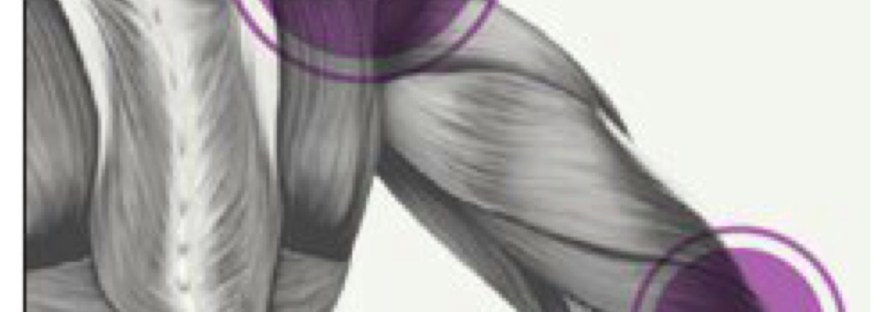
Lateral epicondylitis  (tennis elbow), involves the muscles and tendons of your forearm. Your forearm muscles extend your wrist and fingers. Your forearm tendons (often called extensors) attach the muscles to bone and they attach on to the lateral epicondyle. The tendon usually involved in tennis elbow is called the Extensor Carpi Radialis Brevis (ECRB).
If the muscles and tendons are strained (overused), tiny tears and inflammation can develop near the bony lump (the lateral epicondyle) on the outside of your elbow.

As the name suggests, tennis elbow is sometimes caused by playing tennis. However, it is often caused by other activities that place repeated stress on the elbow joint, such as decorating, playing the violin and repetitive lifting.

Treatment

Approximately 80 – 95% of people suffering with tennis elbow recover fully using treatment. These treatments include:

Rest
The first step is to give your arm proper rest, this involves stopping any sport/repetitive motions or heavy work activities for several weeks.

Ice
10 minutes at a time over the elbow joint, you can also take ibuprofen to reduce any inflammation and reduce the pain you may be experiencing.

Physical therapy
Sports Massage and manipulation into the forearm will help to reduce the tension in the muscles. Specific exercises are recommended to help strengthening the muscles of the forearm. Massage will help to stimulate healing of the micro-tears in the muscles. (exercises are shown on my instagram page @mollysportsmassage)

Equipment check
Check your racquet to make sure it is a ‘proper fit’ for you. Stiffer racquets and looser-strung racquets often can reduce the stress on the forearm. This will take the pressure off the muscles in the forearm and therefore reduce the likelihood of tennis elbow reoccurring.

Check the weights you are lifting – reduce the weights and less reps while you are in recovery. All of this will help to speed up recovery.


New Year, New Goals?

We all start a New Year with huge plans to be more healthy, try to get down the gym or go for a run more frequently and eat clean but do we ever think about looking after our muscles?

I know I say it every years but why not try and include Massage into your new year resolutions?

1. Get active 

Sports  Massage Therapy has been proven to have major benefits for athletes, including enhancing performance, improving conditioning, speeding up recovery and preventing injuries. If you are going to increase your exercise you need to incorporate massage to prevent any injuries and get the best results for you.

2. Stress Management

I have written a blog about the importance of massage and stress. Studies have shown that getting a massage does infect reduce stress levels and improves mood.  (Please see my other blog for more details)

3. Take control of your pain

We need to take control of how our body is feeling and listening to it more. I see so many people who say ‘I thought it would go away and now its worse‘. If you get a massage as soon as you feel the niggle the likelihood of it turning into an injury is significantly reduced. It will also decrease the recovery time, if you allow a niggle to get worse you will need more treatment to correct the issue. You may also need to stop training which would really affect your fitness goals!

Its simple, include Sports Massage in your Healthy New Year Goals and this will keep you on track and tackle any nasty niggles!

For the month of January I am offering a beer a friend deal. Your friend gets 20% off their first 1hour and you get 10% off your next treatment!

T&C apply, please message me for more details and I cannot wait to see you all in 2019!

Stress and Massage

So, it is mental health awareness week in the US this week – yes, I may be jumping on their event a little bit BUT in light of recent events in the media etc. I really felt like writing this blog about stress and the benefits of massage.

Mental health isn’t something that people want to talk about, yet we are always happy to use the word STRESS. If you feel yourself constantly saying ‘I’m so stressed’ you need to think about the WHY. From a sports massage point of view, I see many clients that come in and say ‘I carry all my stress in my shoulders’ or ‘when I’m stressed I get tension headaches’ – why is it that the more stressed we are the tighter the muscles become?

The ‘science’

The activation of the stress response causes muscles throughout the body to tense up. When the stressful situation ends, the muscles will relax. However, if the stressor (e.g. work, family etc.)  is constant, the muscles may remain in a tensed state which may lead to joint aches and pains, tension headaches, back and neck pain.

How can massage help relieve stress?

During a massage there is an increase in the release of dopamine and serotonin and a reduction in cortisol levels, these chemicals are all directly linked to stress.According to the National Institutes of Health, massage therapy may (definitely will) help relieve your muscle tension. As a massage therapist I would use various techniques to manipulate the muscles to help them return to a relaxed state. This will therefore help to reduce tension, reduce pain and in turn reduce stress.

Furthermore, stress can also be linked to high blood pressure and heart condition, some research has shown that regularmassage therapy will help to lower blood pressure and heart rate, which will reduce the strain on your heart and help you maintain a healthier circulatory system.

Finally, massage is really about doing something for yourself, taking that time out of your busy life to have someone else look after you, decrease your pain, talk about things other than your stressors!

1 Year Anniversary of Locker 27

So over the weekend I celebrated 1 year at Locker 27! I cannot believe how quickly the time has gone, I do feel like I have been there forever (in a good way).

I recently did and interview talking about how I got into doing sports massage and all the challenges that I have faced along the way. Therefore, this blog will be my story to getting my amazing room at Locker 27.

When I was at University I wasn’t sure what I wanted to do when I finished my Sports Science Degree, I knew I enjoyed the anatomy and physiology modules of my course but had no idea what to do as a full time job. I decided to do a Sports Massage Diploma as a CV booster as I was thinking about doing a Physio masters and this would help me get onto a course. The company I selected ended up asking me to set up the Sports Massage course at my University and I was in charge of getting students enrolled on the course.

Once I started the course it became obvious that I really loved it and started to think about making it my career. I didn’t know anything about setting up a business, but I knew that is what I would have to do if I wanted to make it a full time job! So, at the age of 21 I was a business owner and completely 100% self employed and very scared. The first year was tough, but I decided to work under the umbrella of other companies to gain experience and do some private work on the side. I cannot thank these companies enough for that year of experience – it massively helped me to gain confidence and enhance my skills as a therapist.

In September 2017 I started at Locker 27 – I knew it would take a while to build up a client base large enough to be there full time so for a while I had a couple of locations on the go. This was SO tough on my body, I was driving from one location, eating lunch in the car and then starting all over again at the next. Some days I was working 12 hour days – but it was definitely worth it!

I have now been full time at Locker 27 since May and it has been amazing – I have a lot more time to myself to grow my business, work on my social media presence and grow my knowledge. My clients are lovely, friendly and I love making a difference to their lives. This difference could simply be ‘I got a PB in my latest completion’ or could be as big as ‘I am no longer in pain’.  The staff at Locker have been so welcoming and I definitely feel part of the locker family!

Challenges/difficulties:

  1. Location – finding the right place for me took a while, I worked at 3/4 different locations before finding Locker 27 but each location taught me different things not just about massage but also about how to (or not to) run a business.
  2. Age – I am young, some locations didn’t want to give me a job because I was so young and they didn’t think I had enough experience. This was tough to overcome because I can’t change my ages – however I felt my youth was a bonus! I was fresh out of studying with a vast knowledge base of the latest scientific studies and with the most up to date training.
  3. Tax – I did not have a clue how to do a tax return, they don’t teach you this in maths at school, I was so lucky as a family friend offered to help me and I couldn’t have done it without him. The most important thing is to stay on top of it, record everything as you go along and don’t get behind!


Thank you to everyone for supporting me over the last 2 years – here is to many more!

Is your Desk Job causing your hip pain?

I had a client recently say that their hips were hurting and felt tight, they told me that they had been sitting at their desk for a long period of time and doing a lot more driving. I explained that sitting for a long period of time is 1 of the most common causes of hip pain.

Sitting for a long period of time causes the glutes to be inactive and cause the quads and hip flexors to become tight. There is no scientific evidence of this, but it has been argued that sitting for long periods at a time physically shortens the hip flexors.

Therefore, it is so important to make sure that you take regular breaks from sitting and do some simple stretches that will prevent tight hips and prevent long term damage. Tight hips will have a knock-on effect on the lower back and glutes. So, if you have pain here you may also have tight hips, so these stretches are aimed at you too!

There are a few things you can do that will help you to reduce the tightness in the hips. One is to try and stand more during the working day, if there are standing desks in your office then try and use them for a couple of hours a day. It is a great way to break up the sitting pattern. If you do not have a standing desk area, then at least try and stand up throughout the day. For every 60minutes of work try and stand for 10.

The most effective is to do regular hip stretches, if you can do them during your breaks then that is perfect, if not then at least get them in before or after work.

  • Kneeling hip flexor stretch

Kneel on one leg, the other in front of you make sure you knee is at 90 degrees to your foot. Drive your hip forward and your knee into the ground. Your iliopsoas muscle (one of the hip flexors) requires isometric activation to stretch it.

  • Runners lunge stretch

If you cannot kneel then an adapted stretch is to position yourself as if you are about to start you race, lift the back knee off the floor. It is like a lunge but with a straight back leg (picture of how to do this stretch or see the image at the top of the blog)

  • Modified Camel Hip Stretch

Put both hands on your lower back and lean back, push your hips forward and look up to the sky.

  • Standing Quad Stretch

If you cannot balance very well then use a wall or chair for support. Lift your heel up towards your glutes (bottom) and hold the foot in your hand. To increase the stretch, push your hip forward.

Foam rolling your quads, ITB and TFL is another brilliant way to help with releasing the hips. Monthly massage is another brilliant way to help prevent tension, massage focusing on the hip flexors, quads, ITB and glutes will help to improve flexibility and reduce tightness in the hips.


All of these stretches will be featured on my instagram @mollysportsmassage over the next few days